

Casestudy 01
Excelsior: Even Higher & Ever Upward
Client: City of Charlotte (via Arts & Science Council)
Location: Historic West Enclave, Charlotte, NC
Collaboration: EVOKE Studio, Durham NC
Fabricator: Demiurge, Denver CO
Year: 2021
Type: Public Art Installation / Cultural Placemaking
Overview
Excelsior is a dual-site public art installation developed for Charlotte’s Historic West End, a community with deep cultural, educational, and civil rights significance. Commissioned by the City of Charlotte, the project translates local histories and community narratives into large-scale sculptural forms that function as both landmarks and cultural markers.
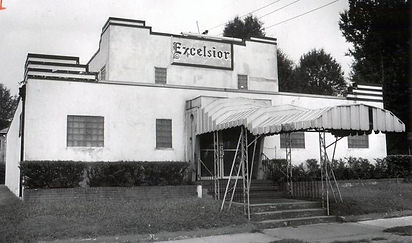
Named after the historic Excelsior Club, the project draws from a legacy of Black social, political, and cultural life in the neighborhood. The title Excelsior—Latin for “ever upward”—frames the work’s central theme: progress, perseverance, and collective aspiration.
1024_3.jpg)
The Challenge
The project called for the creation of a visible and meaningful gateway to Charlotte’s Historic West End, while also establishing a defining cultural marker at Five Points Plaza—an intersection of major thoroughfares including West Trade Street, Rozzelles Ferry Road, Beatties Ford Road, Trade Street, and Fifth Street.
As the first public space developed by the City since 1996, and in conjunction with the introduction of the Gold Streetcar Line, the site carried both civic and symbolic significance. The work needed to respond to this high-profile context while contributing to the identity and experience of the space.
In addition, the project required:
-
Honoring a layered and historically underrepresented cultural narrative
-
Responding to a community in transition amid redevelopment and displacement pressures
-
Engaging a broad cross-section of stakeholders, bridging long-standing residents with newer community voices
-
Designing work that operates at both human and urban scale
-
Integrating seamlessly into newly developed public infrastructure
A key spatial challenge was the development of two distinct installations located approximately one mile apart, with a 91-foot grade change between sites. The work needed to function cohesively across this distance—establishing a unified identity while responding to the specific conditions and experiences of each location.
Approach
Guided by a research-driven and community-centered methodology, the project combined:
-
Archival and cultural research
-
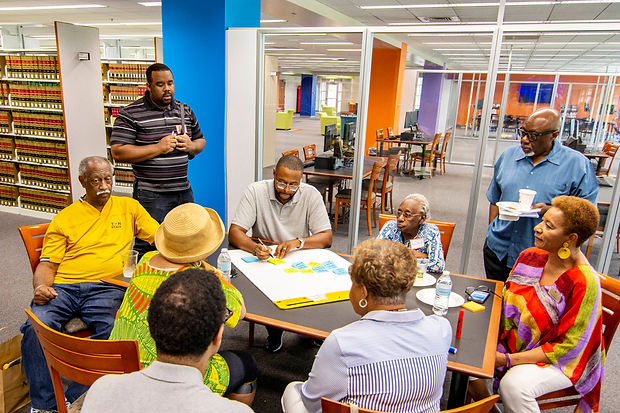
Community engagement with residents, stakeholders, and Johnson C. Smith University students
-
Collaboration with design professionals and civic partners
Narrative became the primary design driver; translating stories of movement, resilience, and aspiration into form.
The concept of “upward movement” emerged as a unifying thread, informed by:
-
The historic journey of Dorothy Counts-Scoggins integrating Harding High School in Charlotte
-
The physical and symbolic ascent along West Trade Street
-
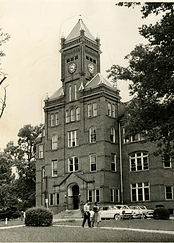
The academic and cultural legacy anchored by Biddle Hall at Johnson C Smith University.



Community Engagement
Community engagement was central to the development of Excelsior. Through meetings, conversations, and collaborative input, residents and stakeholders directly informed the themes, imagery, and narrative direction of the work.
This process ensured that the installation:
-
Reflects lived experiences and local knowledge
-
Resonates across generations
-
Fosters a sense of ownership and pride


The Work
Ever Upward
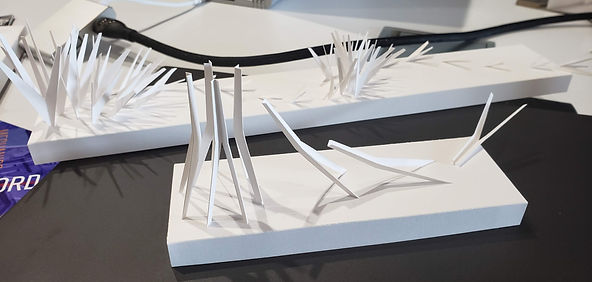
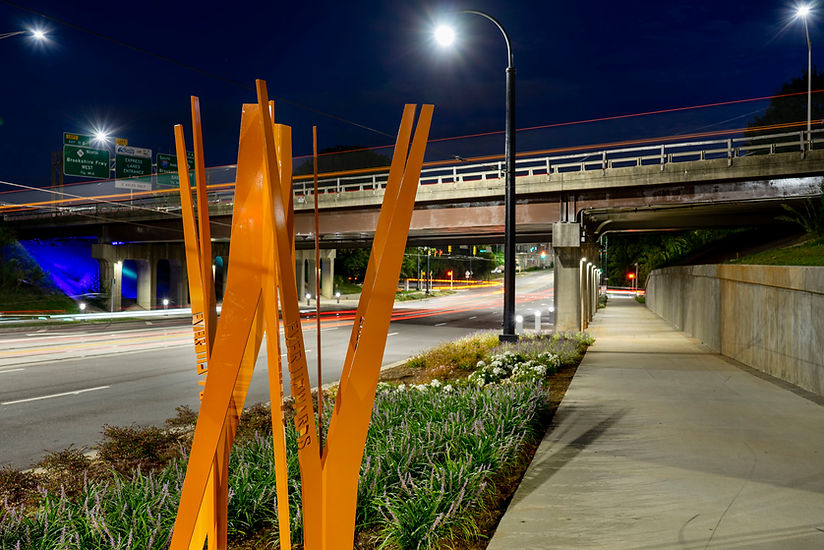
Located along West Trade Street, Ever Upward consists of four seven-foot abstract sculptural forms constructed from folded, laser-cut metal panels.
Each form represents a different dimension of collective movement. An abstract form that represents hands being raised to the heavens in praise and legs walking in determination. This collective movement was inspired by:
-
The walk toward integration
-
The academic journey
-
The geographic rise through the corridor
-
The spiritual and communal “upward” trajectory
Distributed along the corridor, the pieces create a rhythmic spatial experience; encountered sequentially as one moves through the neighborhood.


Even Higher
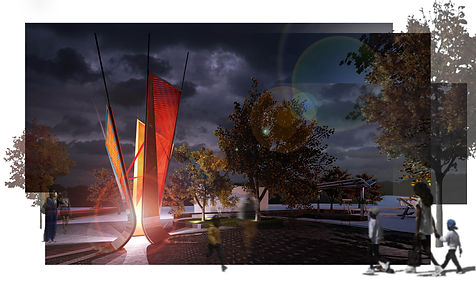
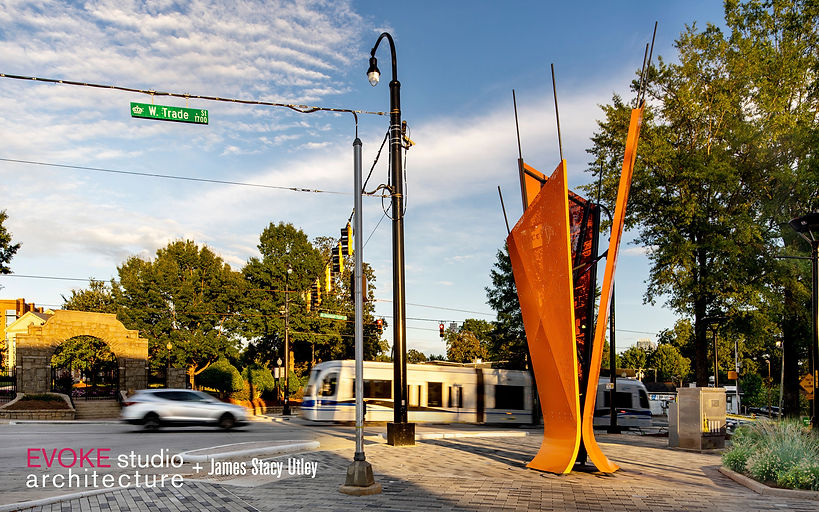
Installed at Five Points Plaza, Even Higher is a large-scale sculptural work composed of three vertical panels ranging from 18 to 28 feet in height.
Inspired by the layered storytelling of a quilt, the panels represent: Perseverance, Inspiration & Icon
Each panel incorporates perforated imagery and material variation, including:
-
Portrait imagery of Dorothy Counts-Scoggins - The Past
-
Architectural references to Biddle Hall - The Future
-
Visual elements from the Excelsior Club - The Present
One panel features a reflective surface, placing the viewer within the work; bridging past and present. At night, integrated lighting transforms the piece into an illuminated landmark, reinforcing its presence within the urban fabric.




Impact
Excelsior establishes a cohesive cultural and spatial identity across two distinct sites within Charlotte’s Historic West End, transforming both a major civic intersection and a corridor into a connected public experience. Despite being separated by distance and elevation, the works operate as a unified system; linking movement, memory, and place.
At the urban scale, the project functions as a gateway and landmark, signaling arrival and reinforcing the presence and significance of the Historic West End within the broader city. At the human scale, it invites close engagement through material, imagery, and reflection; allowing viewers to see themselves within the narrative of the work.
Culturally, Excelsior embeds historically significant references into the built environment, ensuring that stories of resilience, progress, and community remain visible within a rapidly changing landscape. By drawing from figures such as Dorothy Counts-Scoggins and institutions like Johnson C. Smith University, the work anchors contemporary development within a deeper historical context.
The project also demonstrates how community-informed design can produce work that resonates across generations; bridging long-standing residents and newer community members through shared visual language and spatial experience.
Over time, Excelsior is intended to function not only as public art, but as enduring civic infrastructure: a set of markers that contribute to the cultural identity of the neighborhood, support ongoing dialogue, and remain open to evolving interpretation as the community continues to grow and change.